FEM (Finite element modeling)
Finite Element Analysis (FEA), also known as Finite Element Modelling (FEM), is an integral part of mechanical design at TPU A/S. We use it throughout the development process, from fast linear analyses in early concept phases to advanced non-linear and explicit simulations for complex design challenges.
Our simulations are primarily carried out in Ansys Enterprise, an industry-leading software platform for engineering simulation.
Our experience includes:
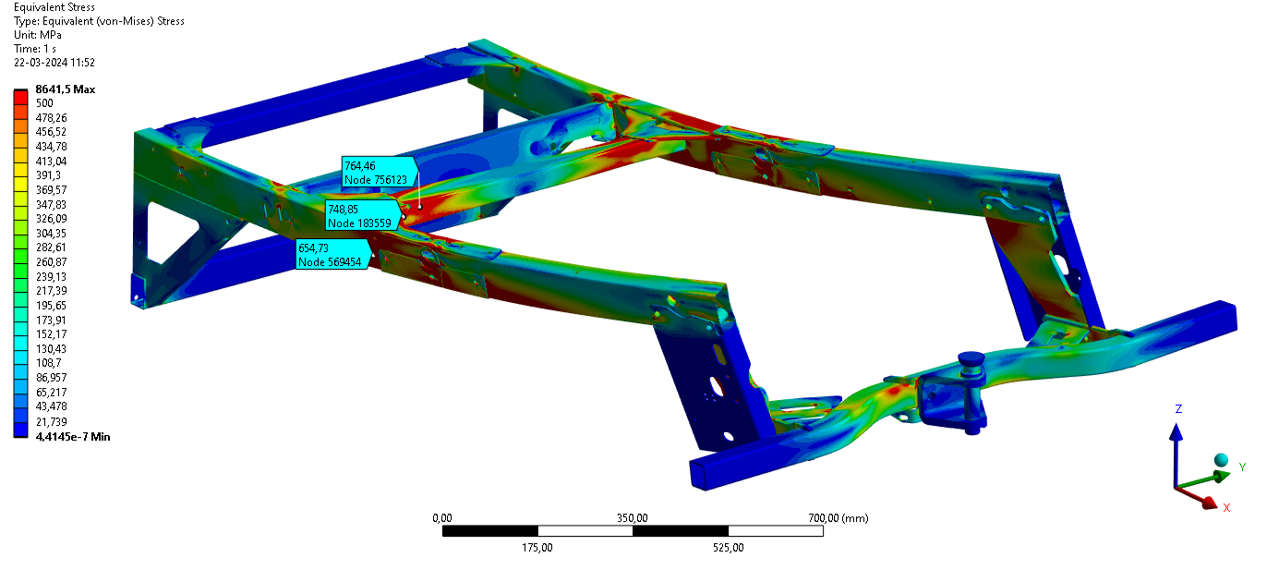
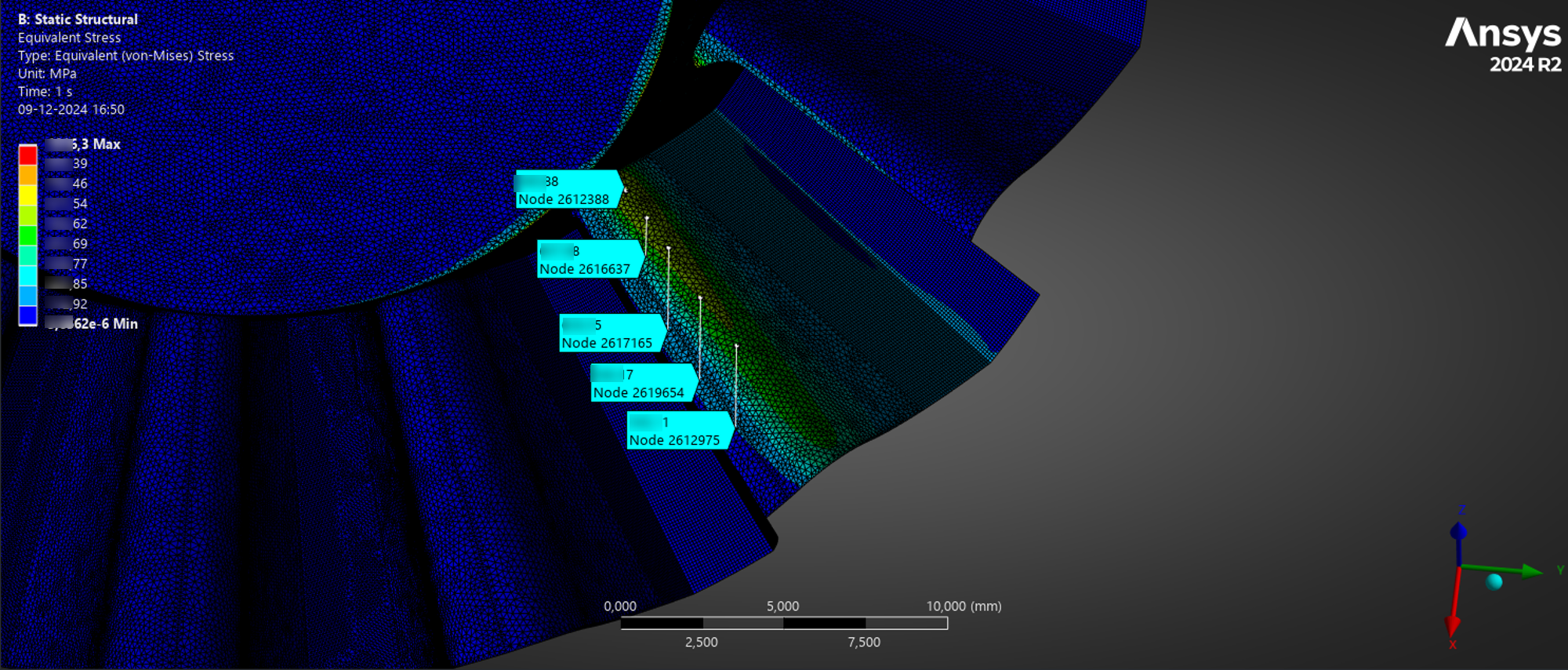
Analysis of stress concentrations, reactional loads and natural frequencies
Simulation of injection moulded polymer parts
Analysis of large assemblies, such as medical devices
Non-linear modelling of elastomers (rubber and TPE) and other soft materials
Welded structures in steel and aluminium
Today simple FEA can be performed fast and has therefore become essential also for conceptual development. Calculations can be as quick as 15 minutes including setup.
Optimisation of a snap-lock mechanism
Evaluation of flexibility, insertion force, retention force, and local stress concentrations during assembly and use.
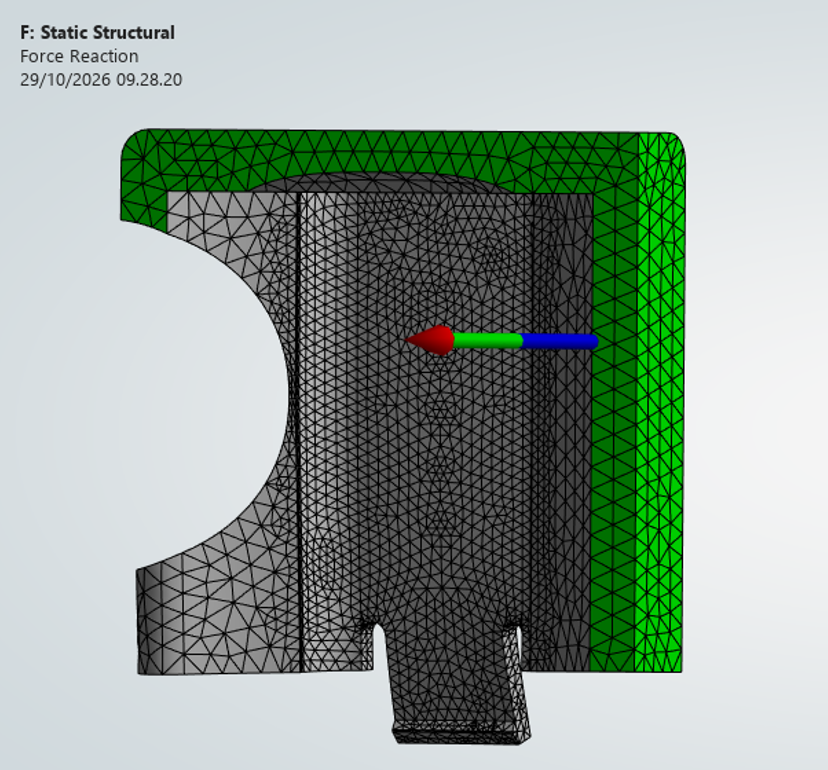
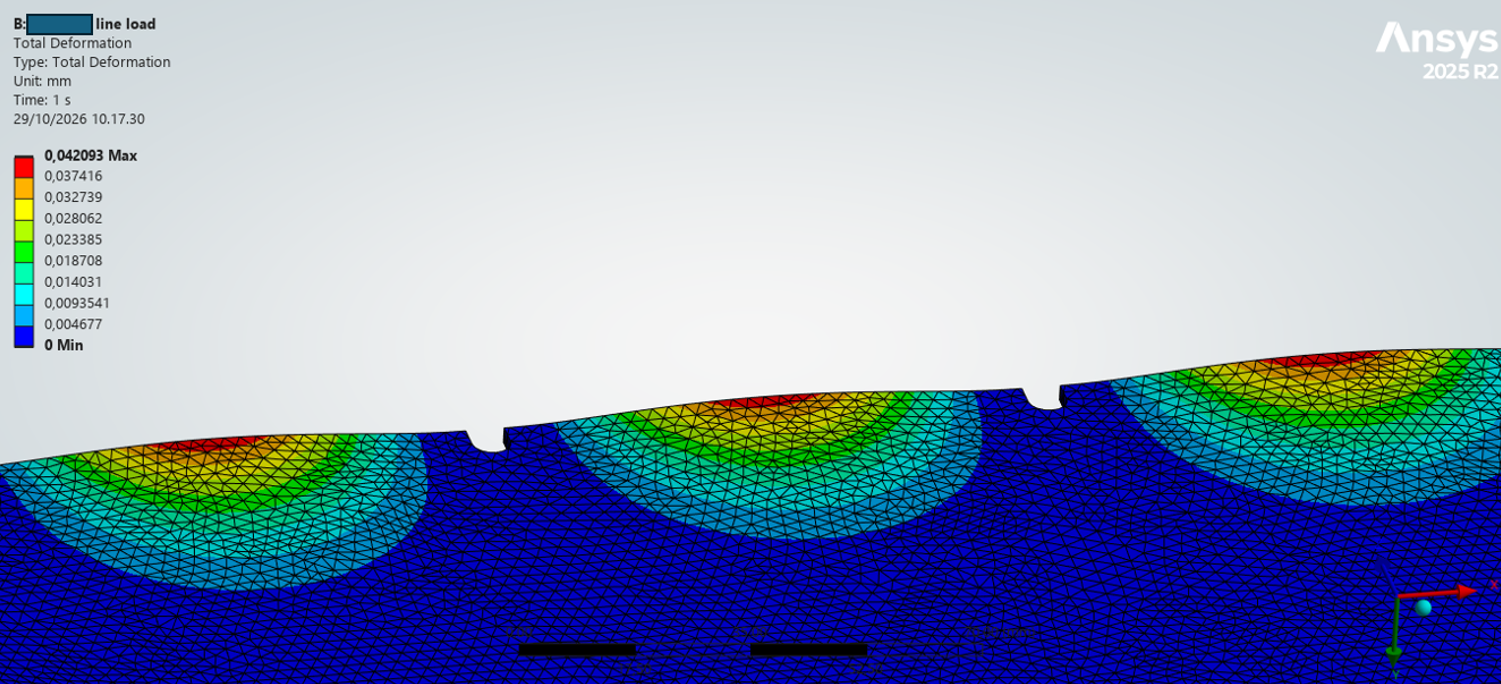
Seal compression analysis in a thin-walled structure
Evaluation of reaction forces and resulting structural deflections caused by seal compression between mating components, ensuring adequate sealing performance without excessive deformation.
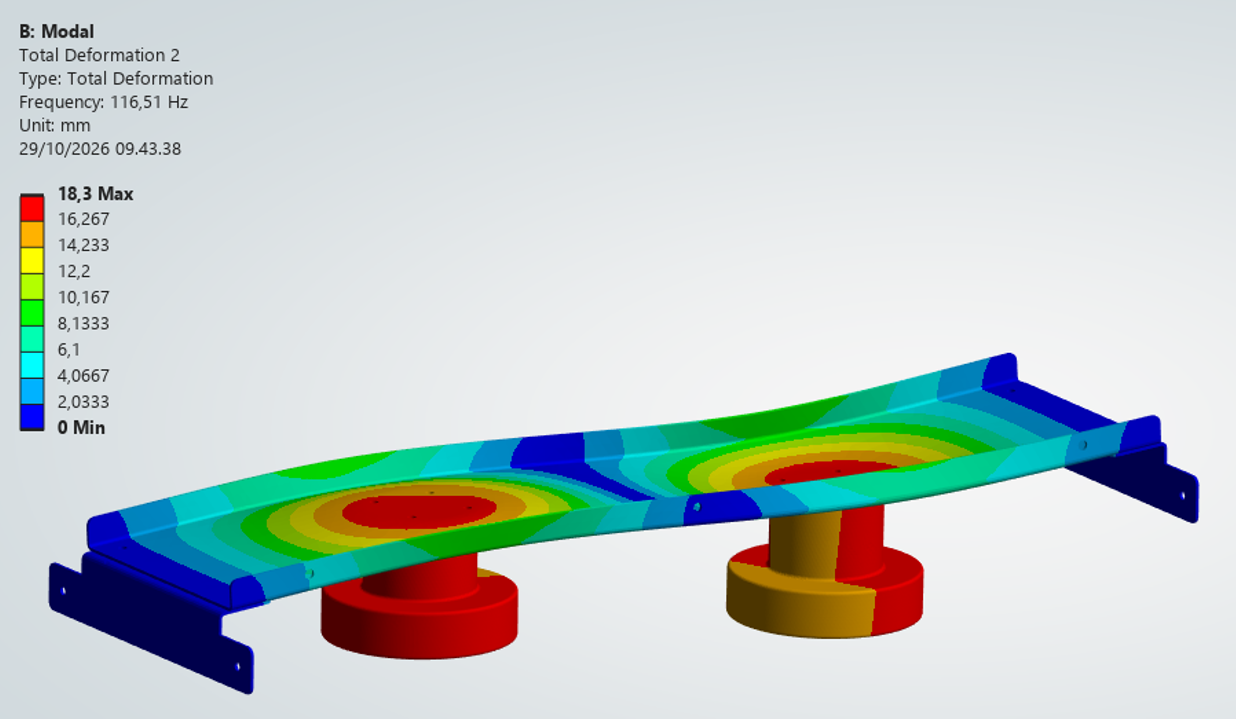
Eigenfrequency analysis of a ventilation fan support structure
Modal analysis used to verify that the structure's natural frequencies remain sufficiently separated from excitation frequencies generated during operation of the fan.